AI, IoT, SDGs and the EU AI Act: Looking back at the second run of our vital importance seminar in Platres
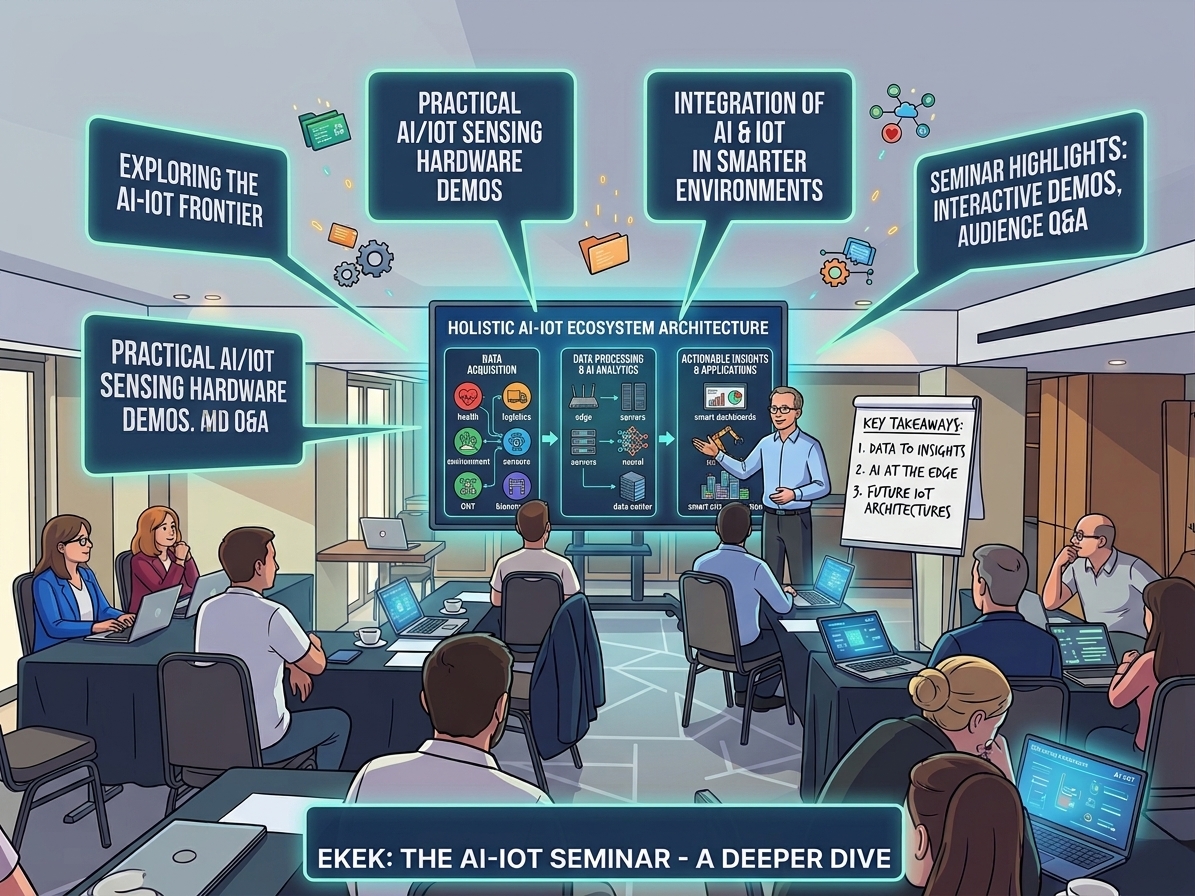
On Saturday 24 and Sunday 25 October 2026, 23 professionals from 16 organisations gathered at Pendeli Resort in Platres for the second run of Harnessing Artificial Intelligence (AI) and the Internet of Things (IoT) for Sustainable Environments and Smart Operations Management, an HRDA vital importance seminar. EUROCY Innovations delivered it as delivery partner to Frederick University’s Training and Certification Centre (EKEK) through our colleague Dr Ryan Grammenos who led the training.
A mixed room…in the good sense!
Participants came from various backgrounds including healthcare and life sciences, Internet of Things (IoT), AI and digital services, research and policy, hospitality, construction, shipping, investment and private education.
The seminar used building and indoor environmental quality data as its teaching vehicle, but the skills it focused on are not specific to buildings: setting thresholds and alerts, keeping logs as evidence, testing what-if scenarios, checking before-and-after results and telling a measured value from an estimated one. The same moves apply whether the data comes from an office, a hospital, a hotel, a building site or a ship.
The seminar also encouraged a habit useful in any sector: checking AI and IoT claims at their source, for example by asking what baseline a reported saving was measured against. The programme was organised across multiple modules, from definitions and common misconceptions, through sensors, networks and real-time monitoring to digital twins, change management and the ethical use of AI and IoT. The format was hands-on and interactive.
What changed for SMEs in July: the AI Act timeline
Many participants wanted to know what the EU AI Act means for their organisations and the answer shifted over the summer. Regulation (EU) 2026/1744, known as the Digital Omnibus on AI, was signed on 8 July 2026, published in the Official Journal on 24 July and entered into force on 27 July. It amends the AI Act (Regulation (EU) 2024/1689).
The main changes are:
|
What |
Date |
|
High-risk AI in the Annex III areas, such as recruitment, education and credit scoring |
2 December 2027 (was 2 August 2026) |
|
High-risk AI that is a safety component of a regulated product (Annex I), such as a medical device |
2 August 2028 (was 2 August 2027) |
|
Two new prohibited practices: non-consensual intimate imagery and child sexual abuse material |
2 December 2026 |
|
Marking of synthetic content by generative systems already on the market before 2 August 2026 |
2 December 2026 |
Delayed is not the same as cancelled and most of the Act did not move. The prohibitions and the AI literacy duty have applied since 2 February 2025 and most of the transparency duties in Article 50 began to apply on 2 August 2026.
Three changes matter in particular for smaller organisations:
- Relief extended. The existing SME simplifications (simplified technical documentation, proportionate quality management and lower penalties) now also cover small mid-cap enterprises.
- AI literacy softened, not removed. Providers and deployers must now take measures to support AI literacy among their staff, rather than ensure a sufficient level of it. The duty still applies to every organisation using AI and law-firm commentary advises keeping records of the measures taken.
- A narrower "safety component". AI that only assists users or optimises performance is not automatically a safety component unless its failure creates health or safety risks. That narrows when AI embedded in a product is treated as high-risk, which is relevant to smart operations.
This is general information, not legal advice. Organisations should check their own position against the Official Journal text.
What we take from it
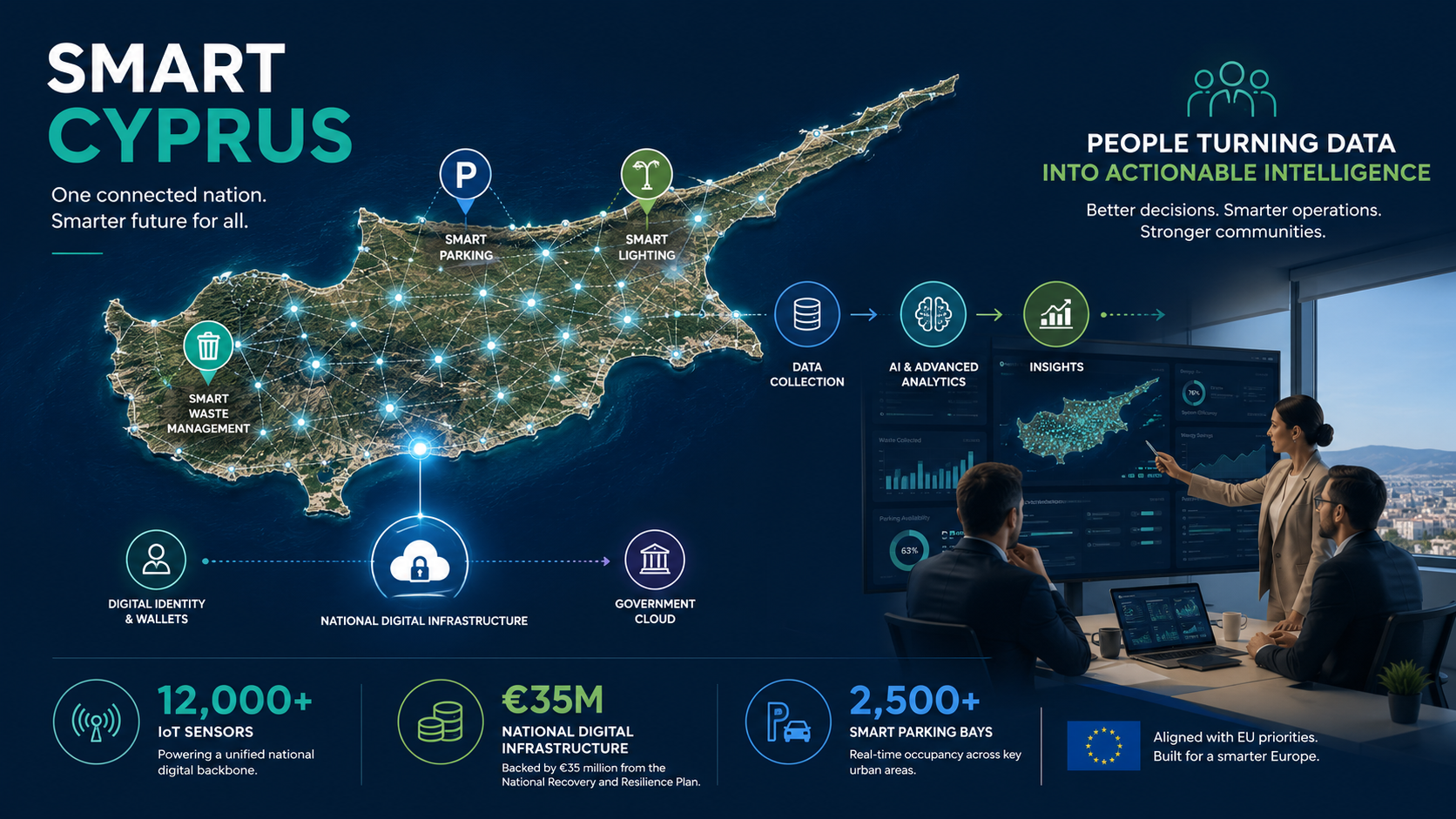
The seminar and the regulatory news point the same way and it is the point we made when writing about Smart Cyprus, AI and IoT: the measure of any digital strategy is how many people know what to do with the data and the tools. The deadlines moved. The expectation that people understand the systems they use stayed where it was.
Our thanks go to each and every participant, to the HRDA (ΑνΑΔ) for subsidising the seminar, to the EKEK team at Frederick University for providing the logistical support and to the team at Pendeli Resort who hosted us and made us feel welcome and comfortable.
Sources & further reading
Regulation (EU) 2026/1744 (Digital Omnibus on AI), EUR-Lex
White & Case: EU AI Omnibus enters into force, amending the AI Act
EU AI Act: Digital Omnibus on AI, what changed (independent resource)