The EU Accessibility Act is now in force: Is your organisation ready?
Since 28 June 2025, the European Accessibility Act (EAA) has applied to specific categories of products and services across the European Union. For businesses, understanding which requirements apply is an important step towards meeting their legal obligations.
The Act is based on Directive (EU) 2019/882, which establishes common accessibility requirements for certain products and services. Its purpose is to reduce barriers for people with disabilities and make accessibility rules more consistent across the European single market.
However, the legislation does not apply automatically to every business, website or digital product. The first step is to establish whether an organisation’s activities fall within its scope.
Which products and services are covered?
The European Commission’s overview of the European Accessibility Act identifies several categories covered by the legislation. These include computers and operating systems, smartphones, certain self-service terminals, e-books, consumer banking services, electronic communications, selected passenger transport services and e-commerce.
For an online retailer, accessibility may affect how customers navigate a website, understand product information and complete a purchase. For a banking provider it may concern access to digital banking services and the information customers need to use them.
The applicable requirements depend on the product or service concerned. Businesses should, therefore, identify which of their activities are covered before deciding what changes may be necessary.
The Act also includes exemptions and transitional arrangements. For example, microenterprises providing services are exempt from the EAA’s service requirements. Article 14 of the Directive provides a process for assessing specific cases in which compliance would fundamentally alter the basic nature of a product or service or impose a disproportionate burden. These provisions have conditions and should not be treated as general exemptions. The relevant details are set out in the Directive itself.
What does this mean for organisations in Cyprus?
Cyprus has introduced the Accessibility of Products and Services Law to align national legislation with the European framework. The full text of the Cypriot law sets out the products and services covered, alongside the relevant accessibility obligations.
The law applies to specified products placed on the market and services provided to consumers from 28 June 2025, subject to the applicable exemptions and transitional provisions.
For example, the Cypriot law provides a transitional period ending on 28 June 2030, during which service providers may continue using certain products that they lawfully used to provide similar services before the application date. Contracts for services agreed before 28 June 2025 may also continue unchanged until they expire, subject to the statutory limit of five years from that date. Separate provisions apply to certain self-service terminals.
These arrangements mean that organisations should not assume every existing product, contract or service is treated in the same way. The type of service when introduced and the relevant transitional provisions may all affect the assessment. Where the legal position is unclear, organisations should seek advice specific to their circumstances.
Four practical steps towards readiness
A useful review can begin with four questions.
1. Have you identified the services within scope?
List the products, services and digital functions your organisation provides. Compare them with the categories covered by the EAA and the applicable national legislation. Check whether any specific exemptions apply.
2. Have you reviewed the relevant accessibility requirements?
Once the scope is clear, identify the requirements that apply to each product or service. Depending on the context, these may concern navigation, interaction methods, accessible information or compatibility with assistive technologies. A single checklist will not necessarily cover every legal obligation.
3. Are accessibility responsibilities clearly assigned?
Accessibility can involve management, design, development, content creation and customer support. Assigning clear responsibilities makes it easier to identify barriers, prioritise changes and check whether improvements have been implemented.
4. Can you document your assessment and improvements?
Keep records of assessments, identified issues, corrective actions and testing where relevant. The documentation required depends on the applicable obligations so organisations should establish what is expected for their particular products or services.
These questions offer a practical starting point for an internal review. They are not a substitute for assessing the specific legal obligations that apply to an organisation.
Making accessibility part of digital development
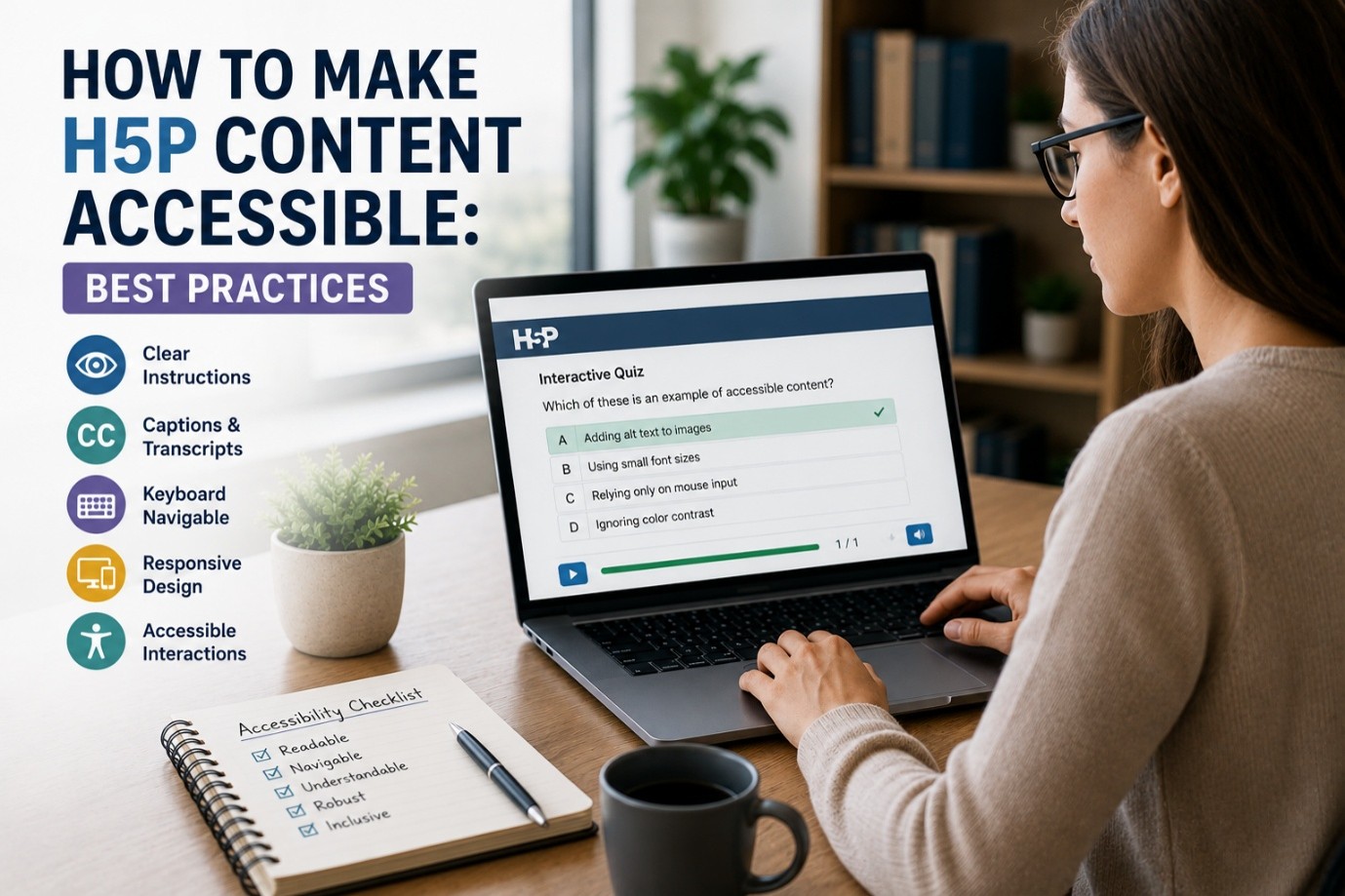
Accessibility is also relevant to organisations that develop or deliver digital learning content. EUROCY has explored practical challenges in its guide, How to Make H5P Content Accessible: Best Practices. The article discusses issues involving interactive activities, keyboard navigation and assistive technologies.
The legal requirements for a particular learning platform or course depend on the circumstances. Nevertheless, the practical considerations extend beyond education. Accessibility is easier to address when it is considered during design and development, rather than after a product or service has been completed.
For organisations covered by the European Accessibility Act, the next step is to identify the applicable requirements, assess existing barriers and decide how any gaps will be addressed. A clear understanding of the legislation provides a more reliable basis for those decisions.