From One Language to Many: Real Use Cases for H5PTranslate in Corporate Training
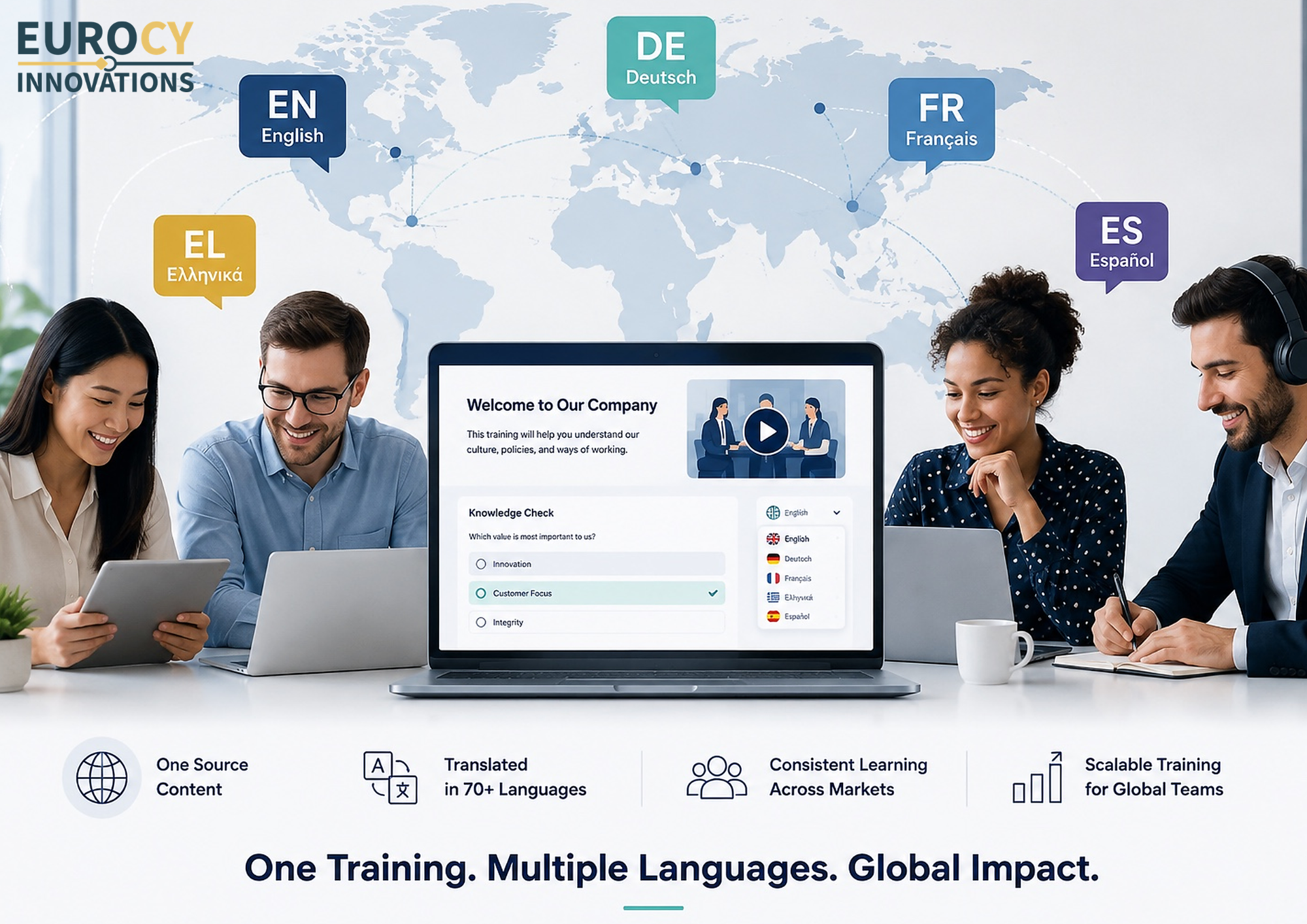
For organisations operating across multiple countries and/or languages, creating training content is only the beginning. A course developed in English may eventually need to reach Germany, France, Greece, Spain or other areas.
The learning objectives remain the same. The challenge is making the same learning experience accessible in different languages, without rebuilding the entire course for every market. H5P supports interactive corporate learning through formats such as quizzes, interactive videos and branching scenarios.
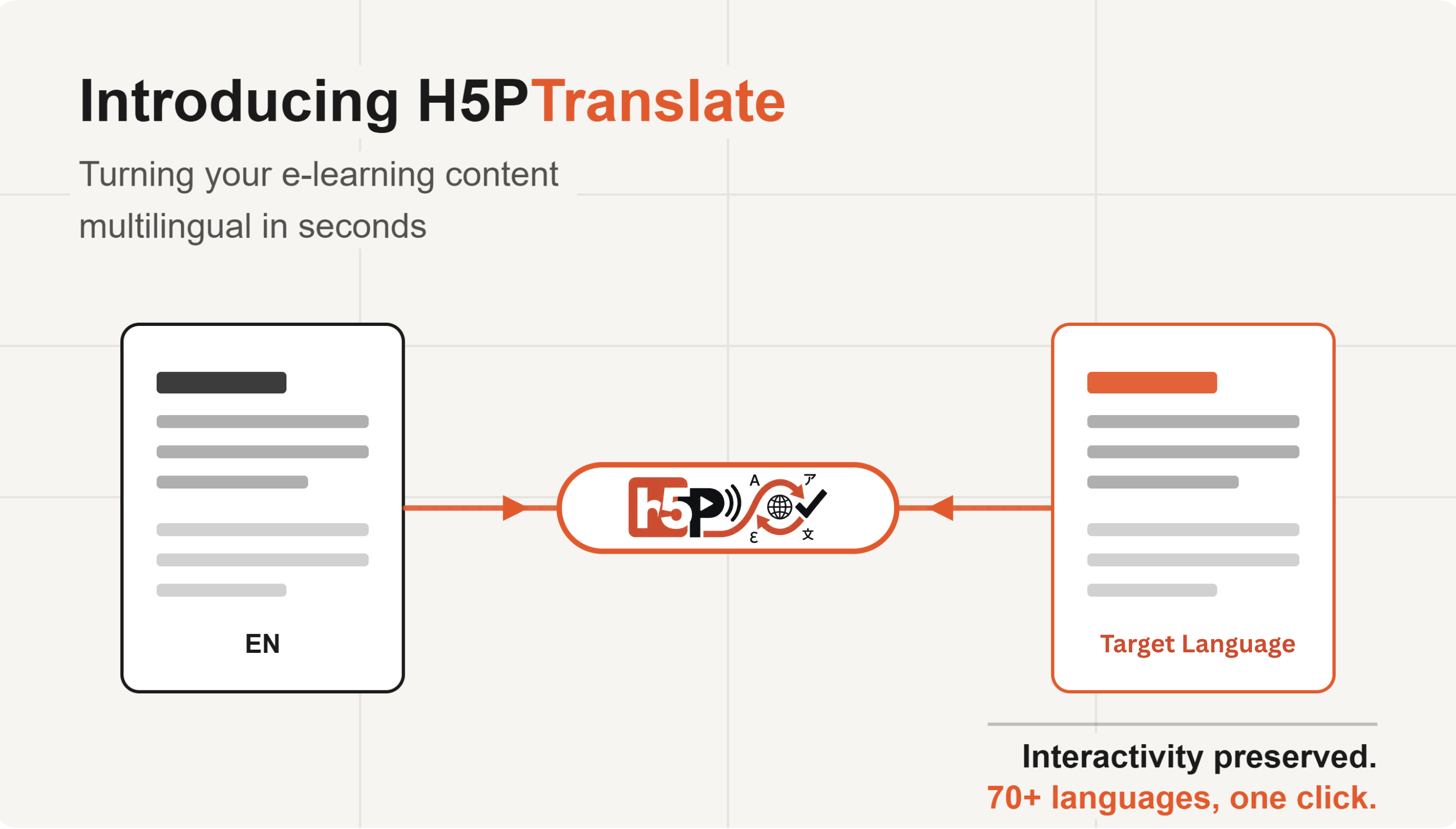
When that content needs to be delivered in multiple languages, H5PTranslate is the solution! It translates H5P items, while preserving their interactive structure and formatting.
So, what can this look like in practice?
1. Multilingual Employee Onboarding
Imagine an international company creating an interactive onboarding course in English.
The course introduces new employees to the company's culture workplace policies, internal processes, communication tools and common situations they may encounter. It also includes quizzes and interactive activities to reinforce key information.
As the company expands, the same onboarding experience needs to be delivered to employees in several countries.
Instead of creating a completely new course for every market, the original H5P activity can serve as the foundation for translated versions:
English → German → French → Greek → Spanish
The language changes, while the core learning objectives and interactive structure remain aligned. This is valuable during onboarding, when employees are already processing a large amount of new information. Providing training in a familiar language can make the learning experience more accessible, while keeping the organization’s onboarding process consistent.
2. Compliance Training Across Markets
Now consider an organisation whose employees across several countries must complete mandatory training on topics such as data protection, cybersecurity, workplace safety or internal policies.
An interactive compliance module might combine policy explanations with videos, scenarios, questions and knowledge checks.
The organisation wants employees in every location to receive the same essential information and complete the same core activities. However, delivering the training only in one language may create an unnecessary barrier for a multilingual workforce.
A translated H5P version can provide the same learning experience in the languages required by different employee groups. H5PTranslate is designed to translate H5P content while maintaining its interactive elements, formatting and structure.
For example:
Source: English Compliance Training
Versions: German, French, Greek, Spanish and other required languages
For compliance and safety-related content, however, translation should not be treated as the final step. Human review remains important to ensure that terminology, instructions and the intended meaning are accurate before the training is deployed.
3. One Training Programme, Multiple Countries
Scenario number 3. A company needs to introduce the same training programme across several countries at the same time.
Imagine a company launching a new customer-service process. Its learning team creates an interactive module explaining the new procedure, why it is being introduced, common mistakes and how employees should respond to different customer situations.
The original course is created in English and is then prepared for rollout across several markets.
The challenge is now both translation and consistency.
If each country recreates the course independently, differences can appear. One team may change a question, another may remove an activity while another may use different examples.
A more structured workflow is:
Create → Review → Translate → Review → Deploy
The original H5P activity remains the source, while the required language versions are built around the same learning experience.
This approach can be particularly useful for organisations that regularly introduce new products, processes, policies or training programmes across multiple markets.
From Translation to Scalable Learning
These scenarios highlight a broader point: multilingual training is not simply about replacing words from one language with another.
It is about creating a learning process that can scale.
With one source course and multiple language versions organisations can maintain common learning objectives and interactive activities, while making training accessible to different audiences.
H5PTranslate currently supports a wide range of languages including Greek, helping organisations extend existing H5P content to additional language audiences.
For international organisations this can turn translation from a one-off task into a repeatable part of the learning workflow.
One Learning Experience, Many Languages
As organisations expand internationally, training needs to move with them.
Whether the goal is onboarding a new employee, delivering mandatory compliance training or launching a new process across several countries, the underlying learning objectives often remain the same.
The question is how to deliver that experience consistently while respecting the language needs of different employees.
H5PTranslate provides one approach: start with an existing interactive H5P activity and create language versions without rebuilding the learning experience from scratch.
The result is a simpler concept for global learning teams:
One training experience. Multiple languages. Consistent learning across areas.