Building Inclusive Workplaces: Empowering People with Disabilities to Access and Thrive at Work
Work offers far more than an income. It brings purpose, independence, dignity and a sense of belonging. Yet across Europe, many people with disabilities are still kept from these opportunities by barriers that have little to do with their skills or potential.
The Picture in Europe
Eurostat data for 2024 show the scale of the challenge. The employment gap between people with and without disabilities in the EU stood at 24%, the widest of all the equality gaps measured.¹ Among people aged 15 to 64 with a severe disability, the unemployment rate was 11.6%, almost double the 5.9% recorded for people without a disability. Of those who were unemployed, 45% had been looking for work for at least a year, and more than two thirds (67.7%) of people with a severe disability were outside the labour force altogether.²
The picture is even more pronounced in Greece, where 66.2% of unemployed people with a disability had been out of work for at least a year, and 75.7% of people with a disability were outside the labour force, both among the highest rates in the EU.²
These are not just figures. They represent talent that goes unused, careers that never begin, and people denied the independence and participation that work makes possible. Under Article 27 of the UN Convention on the Rights of Persons with Disabilities, work on an equal basis with others is a right, not a privilege.³
Inclusion Beyond Physical Access
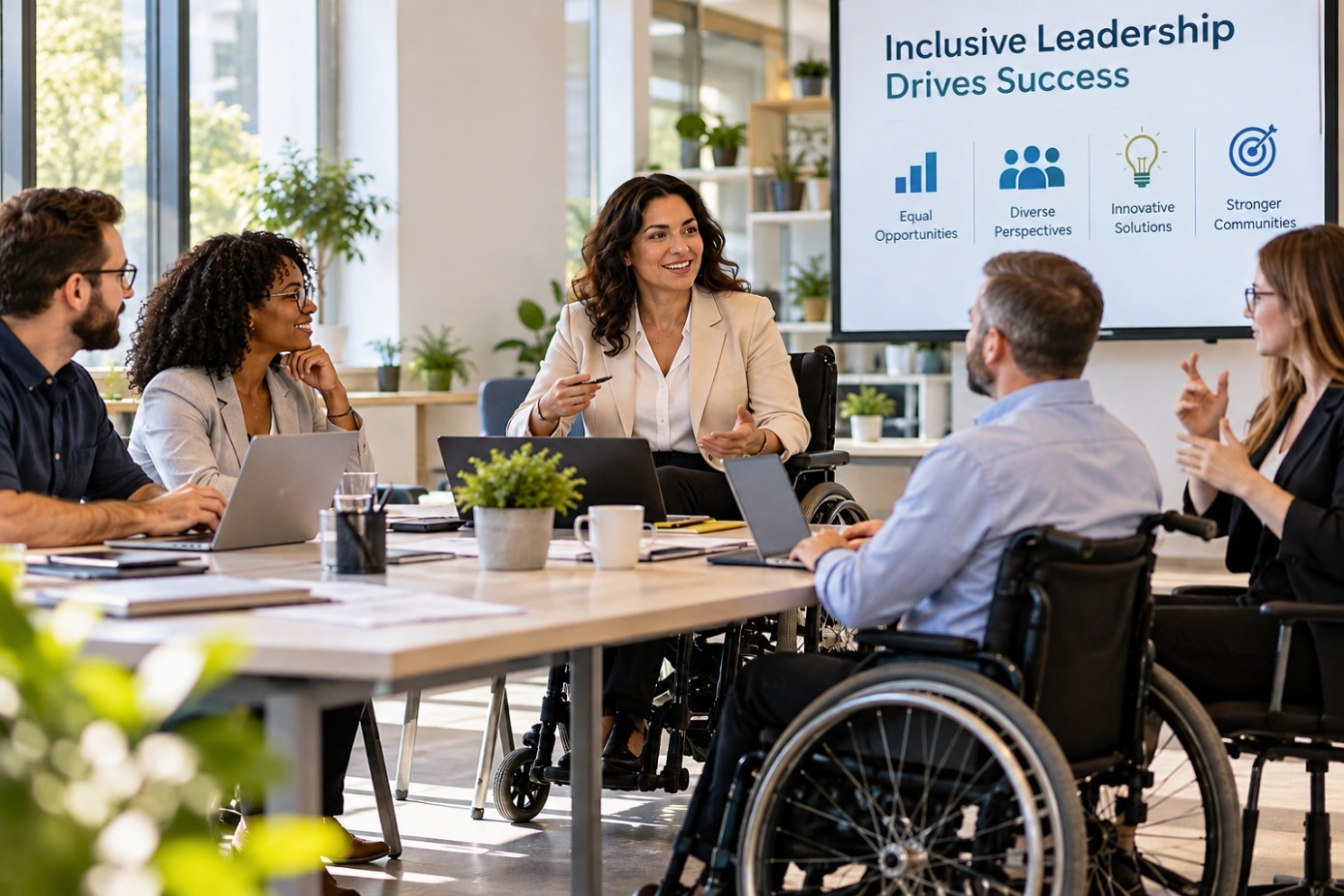
An inclusive workplace is one where every employee is respected, supported and able to progress. Accessible buildings, assistive technology, flexible arrangements and reasonable accommodations all matter, and the right measures depend on the individual and the role. Attitudes matter just as much. When employers focus on perceived limitations rather than skills and qualifications, capable people are excluded before they have a chance to contribute. People with disabilities are not a single group, and listening to their experiences is the surest way to uncover barriers that would otherwise go unnoticed.
What Employers Can Do
Inclusion starts before recruitment and continues throughout employment. Accessible job adverts and application processes, reasonable accommodations, disability awareness training for managers and colleagues and clear procedures for raising concerns without fear of stigma all make a real difference.⁴ Inclusion works best when it is built into everyday decisions on leadership, promotion and communication, and when progress is measured against clear goals with input from employees with disabilities.
Responsibility, however, should not shift to individuals. People with disabilities should not have to overcome avoidable barriers alone or keep proving their worth in environments not designed with them in mind. Career guidance, training, mentoring and clear information about rights all help, but the duty to create fair opportunities rests with employers, institutions and policymakers.
From Awareness to Action
Raising awareness is an important first step, but lasting change requires practical guidance, accessible information and continued support.
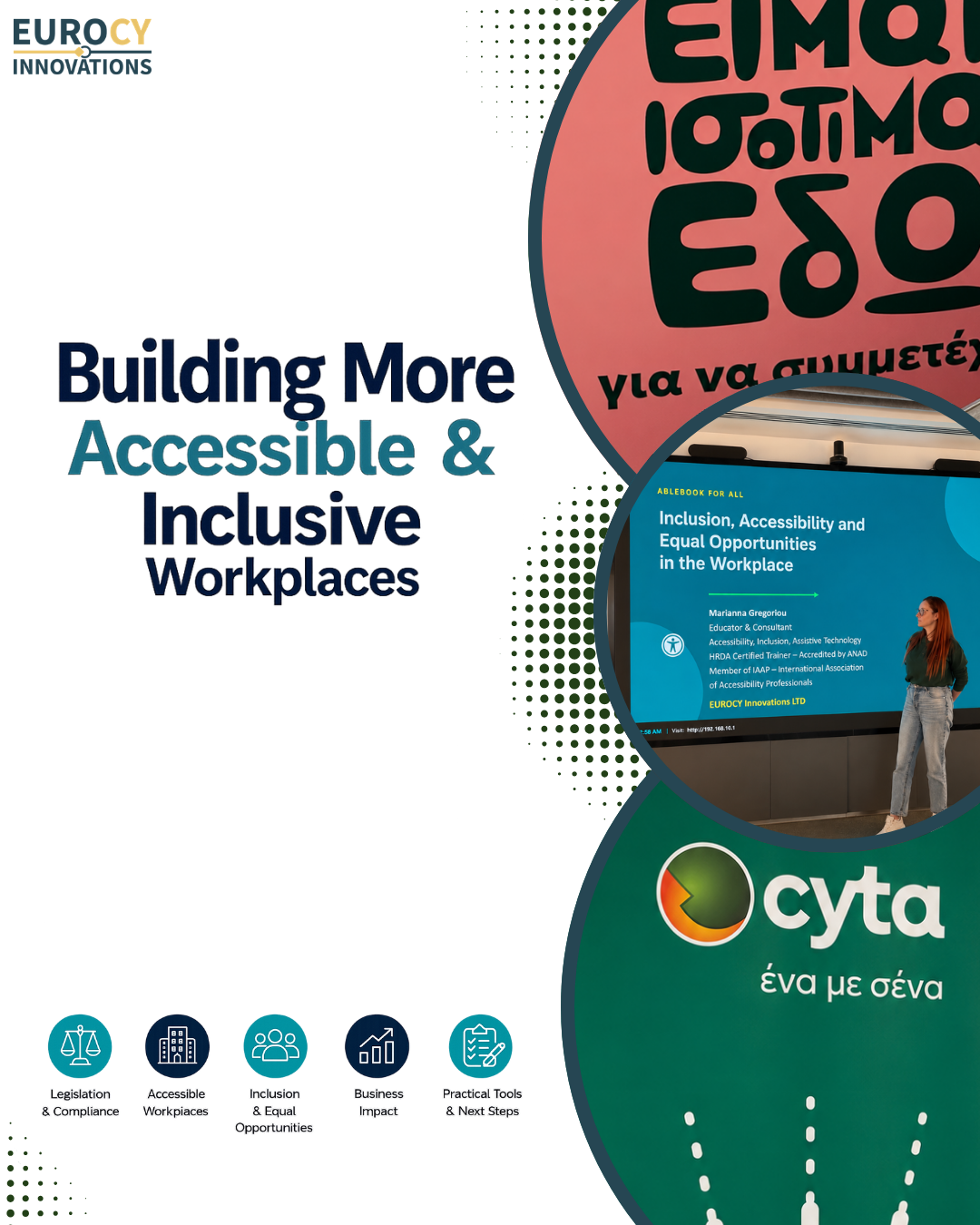
As part of the “Ablebook for All” project, Ablebook and EUROCY held an interactive training seminar on 3 July 2026 for businesses, organisations and professionals. It explored current accessibility requirements and the benefits that follow when people with disabilities have equal opportunities to participate at work.
Building on this, on 29 October 2026 we will host an online workshop supporting people with disabilities on their journey into employment. It will offer practical guidance at every stage: identifying the right type of work, preparing a CV, searching and applying for jobs, preparing for interviews, and deciding whether, when and how to disclose a disability. It will also cover starting a new job, communicating support needs and navigating the workplace with confidence. By breaking the process into manageable steps, the workshop aims to help participants recognise their skills, understand their options and make informed decisions about their future.
Everyone deserves a career that reflects their skills, interests and aspirations. Inclusion begins with each of us, and together we can turn inclusive employment into a reality.
You can register to the workshop at: https://forms.cloud.microsoft/pages/responsepage.aspx?id=-8Meo9HZUkiA-Q94fBZ8-1dREDDfiQRFiGEhCI-fCIRUQTZEVUtCTzU0VVhHUkk0QkpBQVlGQkhTUS4u&route=shorturl
References
- Eurostat (2025). Employment gaps for women and people with disabilities. Published 27 May 2025. https://ec.europa.eu/eurostat/en/web/products-eurostat-news/w/ddn-20250527-1
- Eurostat (2025). Disability statistics: unemployment and people outside the labour force. Statistics Explained, 2024 data. https://ec.europa.eu/eurostat/statistics-explained/SEPDF/cache/140941.pdf
- United Nations (2006). Convention on the Rights of Persons with Disabilities, Article 27: Work and employment. https://www.ohchr.org/en/instruments-mechanisms/instruments/convention-rights-persons-disabilities
- International Labour Organization. Disability and work. Resources on disability inclusion, equal opportunities and workplace accommodations. https://www.ilo.org/topics-and-sectors/disability-and-work
Further reading
- United Nations Department of Economic and Social Affairs (2024). Disability and Development Report 2024: Accelerating the Realization of the Sustainable Development Goals by, for and with Persons with Disabilities. https://desapublications.un.org/publications/un-flagship-report-disability-and-development-2024-1