Accessibility Is NOT an IT Issue, It's a Business Issue
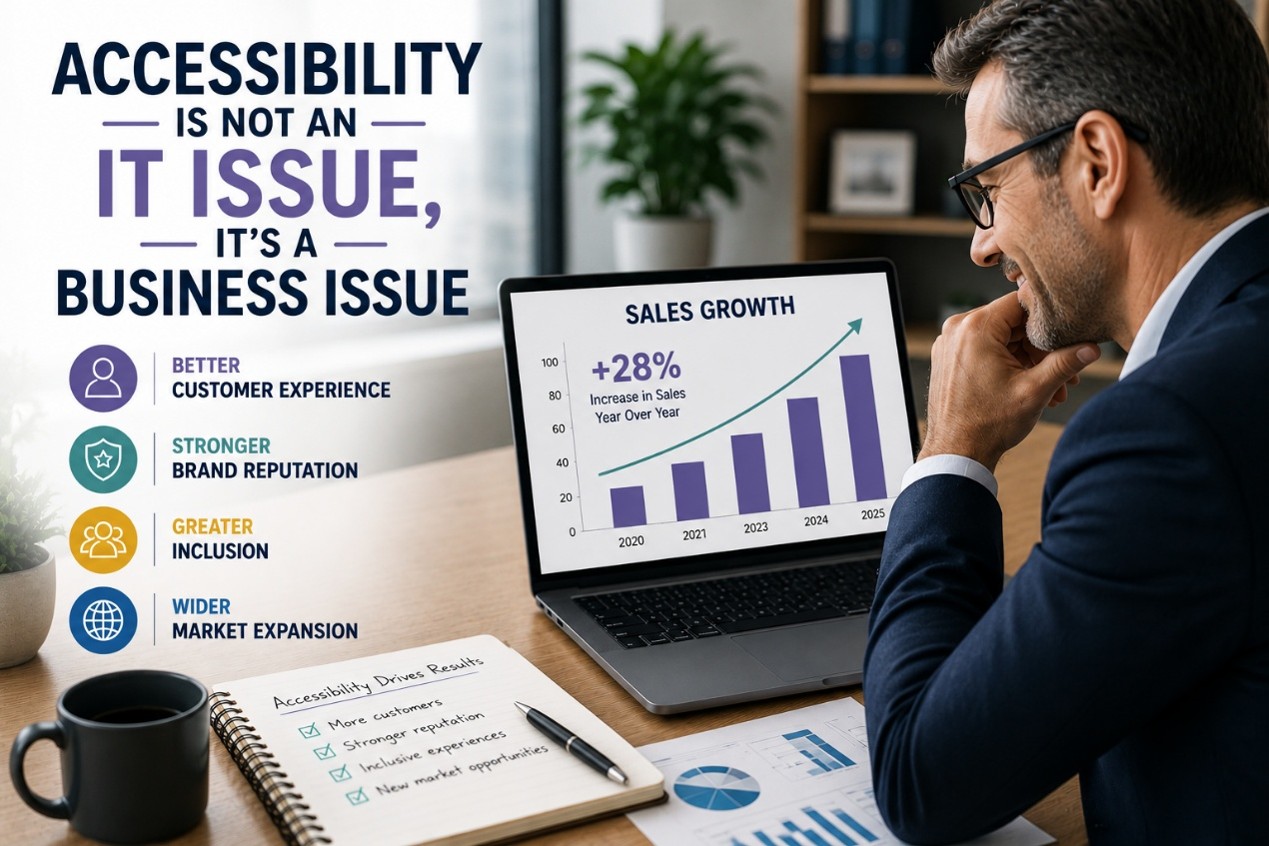
When organizations discuss accessibility, the conversation is often delegated to the IT department or web developers. While technology plays an important role, accessibility is much more than a technical requirement. It affects how customers experience your services, how your brand is perceived and how many people can engage with your business.
Accessibility should be viewed as a business priority, not simply an IT responsibility.
Customer Experience
Every customer deserves equal access to information, products and services. When a website cannot be navigated with a keyboard, videos lack captions or documents are inaccessible to screen reader users, customers may encounter barriers that prevent them from completing simple tasks.
Improving accessibility creates a better experience for everyone. Clear navigation, readable content and multiple ways to access information benefit all users, including older adults, people using mobile devices and individuals with temporary impairments.
Ask yourself: Can all customers interact with your business independently and effectively?
Brand Reputation
Organizations that prioritize accessibility demonstrate a commitment to inclusion and social responsibility. Customers increasingly pay attention to how businesses treat diverse communities and whether they provide equitable access to their products and services.
An inaccessible experience can damage trust and create negative perceptions. Conversely, organizations that embrace accessibility are often viewed as innovative, customer-focused, and forward-thinking.
Accessibility is not only about avoiding complaints; it is about building credibility and trust.
Ask yourself: Is your organization making it easier for all customers to access your products and services or are hidden barriers limiting participation for some individuals?
Inclusion
Accessibility is a practical expression of inclusion. It ensures that people with disabilities can participate fully in education, employment, commerce and community life.
Creating accessible digital and physical environments sends a clear message: everyone is welcome.
This commitment should involve leadership, marketing teams, human resources, customer service, procurement and technology departments. Inclusion is most effective when it becomes part of an organization's culture rather than a standalone project.
Ask Yourself: If a customer with a disability experienced your website, services or communications today, would they see your organization as inclusive, customer-focused and trustworthy?
Market Expansion
More than one billion people worldwide live with some form of disability. When accessibility barriers exist, organizations may unintentionally exclude a significant portion of potential customers, employees and partners.
Accessible products and services reach a wider audience and can open new business opportunities. Organizations that consider accessibility from the start are better positioned to serve diverse populations and adapt to changing customer needs.
Accessibility is not a limitation, it is a growth strategy.
Ask Yourself: How many potential customers, employees or partners might you be excluding because your products and services are not fully accessible?
Moving Forward
The most successful accessibility initiatives are not owned by IT alone. They are supported by leadership and integrated into business planning, customer experience, communications, procurement and product development.
The question is no longer whether accessibility matters. The question is whether organizations are prepared to make accessibility part of the way they do business every day.