Looking back at the CoVE Forum and the PISA 2025 results: What happened?
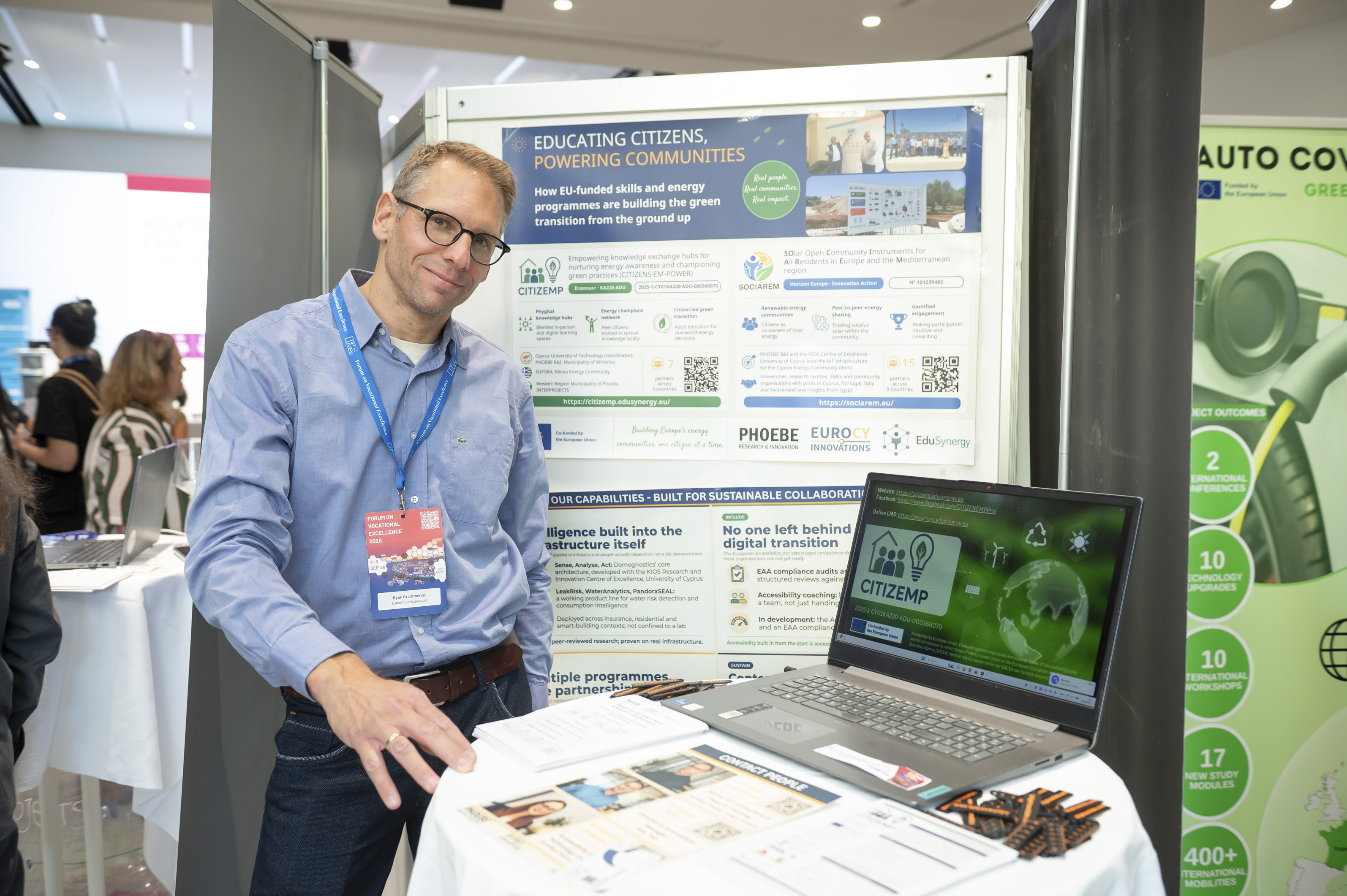
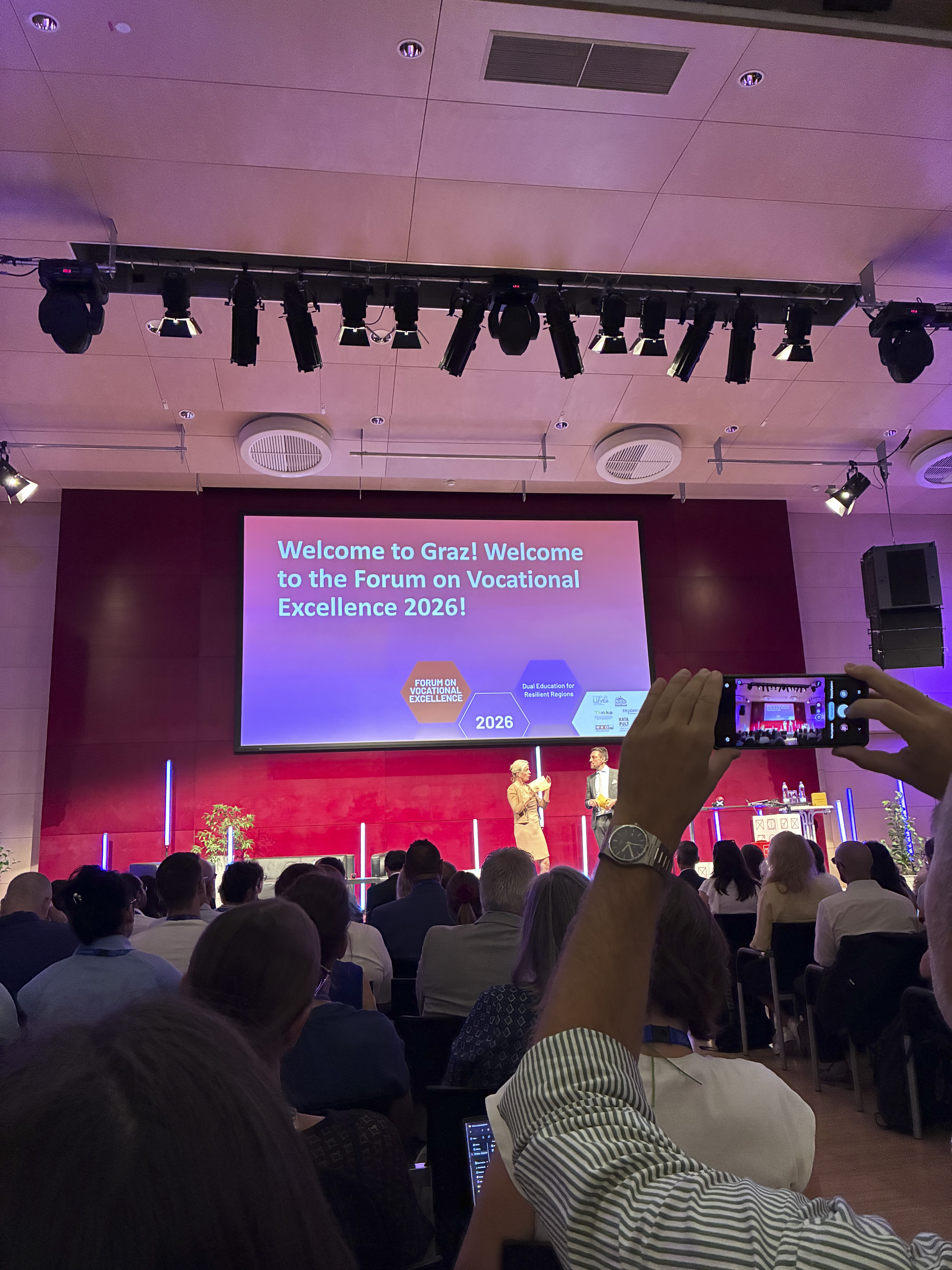
“The PISA 2025 results have just been announced. What happened?”; this was the opening line during one of the keynote talks delivered at the Forum on Vocational Excellence in Graz, on Tuesday 8 September 2026, which coincided with the day the PISA 2025 results were announced. The Forum was attended by our colleague Dr Ryan Grammenos, who represented EUROCY Innovations during the event.
The recent PISA results were indeed very disheartening, to put it mildly. Reading scores across OECD countries fell by 28 points since 2015, roughly a year and a half of learning, and mathematics fell 22 points, just over a year. One in five 15-year-olds is now a low performer across all three subjects, up from 16% in 2022. Cyprus was also named among the EU countries scoring below the OECD average across reading, mathematics and science, alongside Greece, Spain, Croatia and Malta.
Looking at the results, it is very tempting to blame everything on technology, and especially on AI these days. However, it is worth mentioning that the above declining OECD trend actually started well before 2020 (that is to say, even before the COVID-19 pandemic) and has persisted. Furthermore, if one travels back in time, they will discover that this is not the first time tech has been regarded as the villain to education.
When Texas Instruments released its first handheld scientific calculator in 1972, maths teachers warned that mental arithmetic would decline. Yet, decades of subsequent research did not really clear the picture: a widely cited review found calculators had no clear positive or negative effect on basic attainment, and researchers eventually recommended moving the conversation on from the device itself. What mattered was not whether students had a calculator. It was whether they used it as a crutch or as a tool that freed up capacity for harder thinking.
PISA 2025 found the same pattern with AI. Students who said they had not used AI to draft their writing assignments, outperformed those who had. But among frequent AI users, those who had been taught to assess the quality of what the tool produced did better than those who had not. The technology itself was not the deciding factor. The habits built around it were.
The above message was reflected in a speech by the Deputy Minister of Research, Innovation and Digital Policy in Cyprus, Nicodemos Damianou, literally a week later, when, speaking at an event at the University of Cyprus, he addressed a room of students directly: AI can write an assignment; it cannot replace your thinking.
Cyprus’s National AI Strategy, now in its final stages after public consultation, names developing and retaining AI talent and skills as one of its core national objectives, alongside establishing Cyprus as a trusted AI jurisdiction in the Eastern Mediterranean.
That is the recurring thread running through the CoVE Forum at Graz, the OECD's data and Nicosia's own policy debate: the tool is not the risk. The skills gap around it is. A calculator did not fail a generation of students in the 1970s; knowing when and how to use it did. The same choice, made better or worse, is now in front of every education system reading its PISA 2025 results, Cyprus included.
For EUROCY, that is precisely the terrain the CoVE Forum exists to work on, that is to say, vocational excellence, applied skills, and the practical question of how training keeps pace with the tools people are actually using.
And to wrap it up, since we are talking about AI, skills gaps and training, we ourselves are running a relevant 2-day seminar targeted to professionals this coming October.
Sources & further reading
- Forum on Vocational Excellence 2026, Graz
- OECD: PISA 2025 results, press release
- Euronews: Pledges for action in Europe as PISA results show drop in reading and maths skills
- The Conversation: Are calculators killing our ability to work it out in our head?
- Cyprus Mail: AI should serve people, not replace them, says Cypriot deputy minister
- Cyprus launches public consultation on National AI Strategy
Photo credit: © Foto Fischer